terça-feira, 25 de janeiro de 2022

Madden & Harris - Fools Paradise 1975

In common with many private pressings, the only album by Madden & Harris is both imitative of some famous artists and not nearly as good as the best releases by their inspirations. Yet on the other hand, like many private pressings, Fool's Paradise is interesting in that it has an unpredictability and homespun (though not lo-fi) idiosyncrasy of the sort that almost every major-label big-budget release ironed out, particularly in the mid-'70s, when this came out. It's placid, pleasant early-'70s-style folk-rock with a dash of progressive rock influence, sounding fairly British in its appropriation of both approaches, although the duo was based in Sydney. In some senses it's fairly standard stuff of its ilk, with a haunting though not outstandingly innovative melodic air that recalls olden pre-industrial British times. There's also a song cycle feel in which the concept remains elusive, despite the four-part "Fool's Paradise" suite that serves as the closing track. But it's not just the usual rural hippie-folkie trip, with some imaginative use of synthesizers and strings embellishing the arrangements, as well as disciplined interplay between the vocal harmonies that has a slight classical/choral grandeur. At some moments (like "The Wind at Eve"), it can recall the folkiest aspects of the very early King Crimson, when Ian McDonald was still in the lineup; "Margaret O'Grady" is a low-key Kinks-like character sketch, with the obligatory vaudevillian bounce; and some of the more reflective passages (especially in the "Will You Be There" section of the "Fool's Paradise" suite) are a little similar to the gentlest, most acoustic moods of 1970s Pink Floyd. AMG.

listen here or here

Waterloo - First Battle 1970

Belgian band Waterloo's only album, First Battle, was originally released in February of 1970, a crucial time of transition for European rock; this was the tipping point where the expansive sounds of psychedelia lost some of their trippiness and began moving toward a technically complex progressive rock style. Though King Crimson and Yes had released their first albums by this time, prog was still very much in its infancy, and First Battle falls squarely under the proto-prog umbrella, retaining trace elements of psychedelia but definitively leaning into a more sophisticated, classical-influenced realm. One of Waterloo's key inspirations was the Nice -- a proto-prog outfit if ever there was one -- and the influence of both the Nice'Keith Emerson and the contemporaneous sounds of Deep Purple'Jon Lord can be heard in the fleet-fingered Bach-goes-beard-rock licks of organist Mark MalysterMalyster's riffs share the spotlight here with Gus Roan's guitar work, which, in a manner typical for early prog, often sounds a bit more earthbound and blues-based than the keyboards. The top end of Waterloo's musical mix is completed by singer Dirk Bogart's flute playing, which can't help but put listeners in mind of Benefit-era Jethro Tull. As First Battle was merely a tentative step on prog's road to excess, most of the songs are short and to the point, maintaining a kind of muscular, Move-like psych-pop sensibility, the lone exception being the 11-minute "Diary of an Old Man," with it's bluesy/jazzy jams. The bonus cuts are another story, though -- some of them feature the band's second (post-album) lineup, which included saxophonist John Van Rymenant and moved toward a more intense, jazz-tinged style for a couple of singles. Shortly after these later releases, Waterloo disintegrated, with a number of members forming jazz/rock band Pazop. AMG.

listen here or here

quinta-feira, 20 de janeiro de 2022

Open Road - Windy Daze 1971

Open Road was formed by drummer John Carr and bassist/guitarist Mike Thomson in 1970. Both Carr and Thomson had been in Donovan’s band for his 1970 album Open Road. After the sessions, Donovan arranged some live shows with his new band, which he also named Open Road. After playing Europe, the band returned to the UK for the legendary 1970 Isle of Wight festival. Donovan parted company with his band soon afterward leaving Carr and Thomson free to use the name for their standalone project. Simon Lanzon was brought in on keyboards with Barry Husband on guitars.

Open Road, minus Donovan, was the first progressive group to sign with the newly formed Greenwich Gramophone label and they entered Olympic Studios in April 1971 to begin work on Windy Daze. Produced by Tony Reeves (Colosseum/Greenslade), the album was completed at Morgan Studios in London and fused both folk and progressive influences. A follow-up single, Swamp Fever b/w Lost and Found was released in February 1972, and Open Road entered Olympic Studios to record a second album with engineer Vic Smith. Open Road was never released and the group disbanded.  

listen here or here

Déjà-Vu - Between The Leaves 1976

Déjà-Vu is a mid-seventies Heavy Prog band from Norway. The music crosses crunchy guitar vamps with melodic sequences overlaid with lots of keyboards and plenty of monophonic synth leads. Musically, the band seems to take their influences from both the hard rock school and the English symphonic rock masters between Deep Purple and Yes. Worthy a listen. 

listen here or here

Mac Gayden - Skyboat 1975

Mac Gayden was born in Nashville, Tennessee, United States. He played with Charlie McCoy and the Escorts and that group started playing many sessions in Nashville. In the late 1960s, he helped establish two critically acclaimed bands. These were Area Code 615 (signed with Polydor) and Barefoot Jerry (signed with Capitol Records); in which Gayden wrote the songs, played guitars, and sang. Gayden left Barefoot Jerry in 1971 to record his first solo album with Bob Johnston whom he had worked with on Bob Dylan's Blonde on Blonde album, and Johnston asked to produce the solo album on Gayden (McGavock Gayden. EMI). Gayden formed his own band, Skyboat in 1972 and recorded two albums for ABC Records. He also served as producer of an album by Dianne Davidson (Baby) and one by Steve Young (To Satisfy You). Gayden has recorded as a session guitar player with JJ Cale, John Hiatt, Bob Dylan, Linda Ronstadt, Simon and Garfunkel, Kris Kristofferson, Steve Young, Rita Coolidge, Joe Simon, The Valentines, Elvis Presley, Ian and Sylvia, Jerry Jeff Walker, Loudon Wainwright, Connie Francis, The Alarm, Pearls before Swine, Ivory Joe Hunter, Robert Knight ("Everlasting Love"), Clifford Curry ("She Shot A Hole in My Soul"), Bobby Vinton and more. Gayden recorded a lot with Billy Sherrill who produced many hits.

When he was five he started to compose a song on his grandmother's piano ("Everlasting Love"). Later, when he heard Robert Knight's voice while he was performing at a fraternity house at Vanderbilt next to the one Knight's band was playing in, he ran over introduced himself, and told Knight he had a song for him. Gayden got together with Knight and began pulling in the pieces of the song. He also brought in his friend, Buzz Cason, he and Cason produced "Everlasting Love". It was Robert Knight's first hit, followed by another song Gayden wrote, "Rainbow Valley". When Gayden was introduced to Clifford Curry he presented another song he wrote "She Shot A Hole in My Soul", that started Curry's career with a hit. Gayden produced The Valentines on his song "Gotta Get Yourself Together". All these songs were included on the Grammy-winning album produced by the Country Music Hall of Fame, Night Train to Nashville.

Gayden recorded one album on EMI McGavock Gayden, two on ABC Records, Skyboat, and Hymn to the Seeker. The latter he recorded in Miami at Criteria, with Fleetwood Mac recording Rumours in one studio and the Eagles doing Hotel California in the other. Randy Meisner from the Eagles sang background with Gayden on some songs. One album on Winter Harvest Nirvana Blues was then followed by one album on Arena Records, Come Along (2020). He was inducted into the Country Music Hall of Fame, Nashville Cats in 2014 with a ceremony at The Country Music Hall of Fame, and was also included in the Dylan/Cash exhibit for over six years and played many concerts for that exhibit 2014. His guitar and wah-wah pedal were on exhibit at the Hall of Fame as he innovated the slide wah technique on the JJ Cale song "Crazy Mama". Gayden published a book called The Missing String Theory - A Musicians Uncommon Spiritual Journey, which is an autobiography.

listen here or here

Woody Woodmansey's U-Boat - Woody Woodmansey's U-Boat 1977

Following the demise of David Bowie’s former backing band the Spiders From Mars, Woodmansey formed his own unit U-Boat, prefixed with his own moniker. The short-lived band comprised Phil Murray (vocals), Frankie Marshall (keyboards), MacKintyre Duncan (guitar/vocals), ‘Woody’ Woodmansey (drums), and Phil Plant (bass). The result was an acceptable collection of routine late 70s UK pop/rock, without the glam edges. The album was produced by Bronze Records owner, Gerry Bron. This dated sound would be buried within months when the new wave arrived, and units like U-Boat were left appearing incredibly out of fashion, with a sound that had progressed little in four years since the heady days of Ziggy Stardust. ‘Slow Down’ and ‘Rock Show’ have their moments but the rest sounds flat. The Marvel comic book illustrations at least gave the album a distinctive look on the shelves, where many of them refused to budge. Castle Communications reissued the album in 2000 after they had acquired the entire Bronze Records catalog. AMG.

listen here or here

Shampoo - Vol One 1971

Volume One is the singular album by Belgian jazz-rock-prog/art-pop band Shampoo, released in 1971 on Motors. Plenty of sophisticated ensemble work, with energetic solos and psychedelic dreamy vocals. Worthy the listen. 

listen here or here

Joanne Vent - The Black and White of It Is Blues 1969

Produced by Larry Marks, 1969's "The Black and White of it is Blues" sounded like A&M was trying to position her as a Joplin-esque blues singer.  That wasn't necessarily a bad thing.  Judging by tunes like 'Love Come Down' and '' Vent had the chops to easily rival Joplin, or any other roof her other blues diva rivals.  Add to that, judging by the promo photo I stumbled across, she was one attractive young lady ...   Interestingly, at least to my ears, Vent was even more impressive on soul numbers like 'Ninety Nine and a Half', 'Weak Spot', and 'It's a Man's World'. 

With a bit of Etta James in her delivery, Vent sounded quite good on her cover of Billie Holiday's 'God Bless the Child'. "Bet No One Ever Hurt This Bad" is one of the better Newman covers with Vent using a range lower than normal. Vent turned in one of the exceptions on the Joplin-Esque 'Love Come Down'.  The woman did have one amazing voice. The way she took on the refrain on" Ninety Nine and a Half" was simply mesmerizing.   One of the album's best performances. Vent's version of 'It's a Man's World' was quite good, showcasing what a powerful, but controlled singer she was.  Easily to imagine Joplin singing this with a shrill, out-of-control swagger.   Not Vent.  She was crisp, cool, and dazzling. 

Her cover of 'Weak Spot' was quite a bit different than the rest of the album - dropping the blues-rock moves for a surprisingly accomplished soul sound.   Every time I hear this one I have to admit I'm surprised at what a good 'soul' voice the lady had. In spite of an appearance on the Johnny Carson Show, the album disappeared almost instantly, leaving Vent to return to sessions work. Joanne Vent sadly passed away in 1998. Thanks to Rockasteria

listen here or here

Blast Furnace - Blast Furnace 1971

Blast Furnace was a short-lived Danish psychedelic prog-rock band with one self-titled album from 1971. The album combines elements of rock, blues, prog, and heavy psych in typical early 70s fashion and can be recommended to fans of classic-sounding rock in the style of Led Zeppelin (but with bigger early prog-rock influences).  

listen here or here

sábado, 8 de janeiro de 2022

Peter Green - In the skies 1979
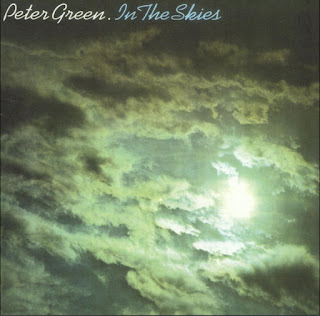
After almost a decade of personal, drug-addled hell since his 1970 debut The End of the GamePeter Green begins his comeback with In the Skies, and a title tune that sounds downright hopeful compared to where he left off. Although Green shares lead guitar work with Snowy White, it's clear from his fluid technique and haunting tone that he can still play. "A Fool No More" is the kind of slow blues Green excels at. Robin Trower drummer Reg Isidore gives way on one track to Godfrey McLean, who played on The End of the GameGreen dips even farther back into his past, courtesy of keyboards by Pete Bardens, who gave him his first professional music job in 1966 in a band with Mick FleetwoodGreen's singing, never a particular strength, is not a weakness here. Five of the nine songs are instrumentals, continuing a longtime Green tradition. It's an unambitious but solid and welcome return by a guitarist who in his prime rivaled Eric Clapton. If that seems far-fetched, listen to A Hard Road by John Mayall's Bluebreakers or Then Play On by Fleetwood Mac. AMG.

listen here or here

Climax Chicago Blues Band - Climax Chicago Blues Band 1969

The debut album of the Climax Chicago Blues Band (they'd later drop the "Chicago" part of the name) was recorded on two days separated by a couple of months in 1968. As British blues revivalists, Climax was better than most, featuring strong playing from guitarist Peter Haycock and keyboardist Art Wood. The selections run the gamut from Chicago retreads ("Mean Old World," "Insurance," "Wee Baby Blues," "Don't Start Me to Talkin'") to band originals like "And Lonely," "Looking for My Baby," "Going Down This Road" and "You've Been Drinking." If one can make it past Colin Cooper's mannered vocals, there's much for Brit blues fans to enjoy here. AMG.

listen here or here

Recreation - Music or Not Music 1972

This is a Belgian band born in the late 60s, whose origins take place in their native Belgium, with the drummer Francis Lonneux and the bassist Jean-Paul Van Den Bossche who previously played in the band '' Les Mistigris '', founded by Turkish singer Baris Manco, with whom they managed to record three singles. At the end of the 1960s, Manco left the group to return to his native Turkey, that is when Lonneux and Van Den Bossche met by chance keyboardist Jean-Jacques Falaise, with whom they would quickly get along, forming this prog trio that they would call '' Recreation ''.

During the three years that their activity lasted they released two studio albums, "Recreation" in 1970, being a debut of six instrumental pieces dominated by heavy Hammond organs, bass, and drums, within a psychedelic sound. Already for their second album, the group is heading towards a much more ambitious and experimental sound, publishing '' Music or not Music '', from 1972, a more than extensive work full of small pieces that make it an authentic sound adventure in the one to enter and explore. Excellent album, don't miss it. 

listen here or here

Westwind - Love Is 1970

By the time British group Westwind's debut album Love Is came out in 1970, its kind of clean-cut, cheery pop-folk had passed out of fashion around the time the Seekers broke up a couple years previously. Listening to it several decades later, of course, it doesn't matter whether this was done in 1966 or 1970. It might be slightly twee, but it's actually pretty good, melodic stuff that does indeed strongly recall the Seekers' mid-'60s records at times in its smooth male-female harmonies. It's also similar to the Seekers in its mixture of early-'60s coffeehouse folk with more modern pop sensibilities, both in the songwriting and the production, which adds some strings and orchestration (though barely any folk-rock) to the acoustic guitar and voices. "Love Is a Funny Sort of Thing" in particular sounds like something that could have been a hit (yes, for the Seekers, not to overdo the comparison) in the mid-'60s. Some of the songs are a little weak in their innocuous, almost sugary sweet quality, which at their worst seem almost as though they might have been tailored for a children's TV show. But others are quite buoyant -- "Rosemary" and "Home Is Where My Heart Is" are other standouts -- and they do get in a more serious, dramatic mood with "Robin Hill." On the whole, there's much more quality (and, sometimes, rhythmic drive) to the songwriting, singing, and arrangements than is common in totally obscure folk albums such as this. It's recommended to fans of the Seekers and, to a lesser extent, other '60s harmonizing male-female folk combos like Peter, Paul & Mary. AMG.

listen here or here

Placebo - Ball of Eyes 1971

Placebo was the first Belgian group to advance in jazz-rock territories. Leader Marc Moulin (already a veteran by the early 70's since he started in 63 with saxman Scorier) was the main composer of this rather large group (they had a four-man brass section) somewhere between Nucleus and a funky Chicago Transit Authority but with that bizarre and sometimes weird/silly Belgian spirit/absurdism. Their three albums (from 71 to 74) were widely played on the alternative scene in the early 70's, so much so, that they appeared in concert on National TV (still to be released commercially but aired two years ago). Their debut "Balls Of Eyes" is maybe their better one (it won a prize at 1972's Montreux Jazz Festival), but the 1973 album is not far behind. After a rather disappointing eponymous album (on the Harvest label), they slowly disbanded, giving their last concert in 76. Marc Moulin will then have a long solo career (his best album being Sam Suffy in 75), diddle in Eurovision spoof-group Telex, work with great Belgian group Cos, produced many artists (Philip Catherine a.o.), host his own radio show, had his own record label and for the last 15 years has been a precursor in acid-jazz. 

listen here or here

Tennessee River Crooks - Tennessee River Crooks 1976

In 1970, Jimmy Stewart and Larry Farrar (childhood friends) were playing in a band called Rat Salad and were approached by Mike Hendrix about joining with some friends of his to play. From this meeting, the band Hit and Run was formed with Jimmy, Larry, Henry Kelley, Mike Hendrix, Pat Michaels, and Bill Clayton. Their intent from the formation of this band was to play their own original music and Jimmy and Mike began writing separately and bringing their own music into the mix. 

Not long afterward, Larry Farrar left the band to take a full-time job and Ronny Waters then joined the band. After a short period of time, Pat Michaels and Bill Clayton, who was a vocalist for Hit and Run, left to pursue a solo career. Rickey Stewart then joined his brother in the band to play drums. The lineup in 1973 consisted of Jimmy Stewart on bass and lead vocals, Rickey Stewart on drums, and Ronny Waters and Mike Hendrix on lead guitars. It was during this period that the band changed their name from Hit and Run to Tennessee River Crooks and the band was based primarily out of Paris, Tennessee. 

The name Tennessee River Crooks was suggested by a friend of the band by the name of Jerry Crouch who worked the door for the band at various gigs. He always kept the money from the door in a Tennessee River Crooks cigar box, which was a cigar company based in Tennessee. In 1975, Larry Farrar rejoined the band and they started working on their first album, which was recorded between June and October of 1976. Mike Hendrix, who had left the band for a short period in 1975, came back and played on some of the cuts he had written. 

The album was recorded in Puryear, Tennessee, just a few miles north of Paris, Tennessee in 1970, Jimmy Stewart and Larry Farrar (childhood friends) were playing in a band called Rat Salad, and was approached by Mike Hendrix about joining with some friends of his to play. From this meeting the band Hit and Run was formed with Jimmy, Larry, Henry Kelley, Mike Hendrix, Pat Michaels, and Bill Clayton. Their intent from the formation of this band was to play their own original music and Jimmy and Mike began writing separately and bringing their own music into the mix. Thanks to Rockasteria. 

listen here or here