Mostrar mensagens com a etiqueta Grateful Dead. Mostrar todas as mensagens

quinta-feira, 26 de dezembro de 2024

Grateful Dead - Blues For Allah 1975

The Grateful Dead went into a state of latent activity in the fall of 1974 that lasted until the spring of the following year when the band reconvened at guitarist/vocalist Bob Weir's Ace Studios to record Blues for Allah. The disc was likewise the third to be issued on their own Grateful Dead Records label. When the LP hit shelves in September of 1975, the Dead were still not back on the road -- although they had played a few gigs throughout San Francisco. Obviously, the time off had done the band worlds of good, as Blues for Allah -- more than any past or future studio album -- captures the Dead at their most natural and inspired. The opening combo of "Help on the Way," "Slipknot!," and "Franklin's Tower" is a multifaceted suite, owing as much to Miles Davis circa the E.S.P. album as to anything the Grateful Dead had been associated with. "Slipknot!" contains chord changes, progressions, and time signatures which become musical riddles for the band to solve -- which they do in the form of "Franklin's Tower." Another highly evolved piece is the rarely performed "King Solomon's Marbles," an instrumental that spotlights, among other things, Keith Godchaux's tastefully unrestrained Fender Rhodes finger work displaying more than just a tinge of Herbie Hancock inspiration. These more aggressive works contrast the delicate musical and lyrical haiku on "Crazy Fingers" containing some of lyricist Robert Hunter's finest and most beautifully arranged verbal images for the band. Weir's guitar solo in "Sage & Spirit" is based on one of his warm-up fingering exercises. Without a doubt, this is one of Weir's finest moments. The light acoustic melody is tinged with an equally beautiful arrangement. While there is definite merit in Blues for Allah's title suite, the subdued chant-like vocals and meandering melody seems incongruous when compared to the remainder of this thoroughly solid effort. AMG.

listen here

sexta-feira, 19 de abril de 2024

Grateful Dead - From The Mars Hotel 1974

The Grateful Dead made their reputation on the road with their live shows, and they always struggled to capture that magic in the studio. The Mars Hotel, while not a classic, represents one of their better studio albums. Jerry Garcia sounds engaged throughout and takes the vocal reigns for most of the songs on the album -- although he's not the most gifted vocalist, he proves himself able and versatile. He sings the rollicking opener, "U.S. Blues," with a tongue-in-cheek seriousness that gives the political song an edge, and he lends emotional sincerity to the atmospheric ballad "China Doll." Garcia shines on guitar during the funk workout "Scarlet Begonias," but the ensemble work is best displayed on the album's centerpiece, "Unbroken Chain." During this song, all the musicians are allowed to shine: Phil Lesh, the bassist and songwriter, provides tender vocals over a piano-based arrangement while the bridge allows the guitars and drums to stretch out in classic Grateful Dead style. This album is highly recommended for fans, but casual listeners should start with American Beauty or Workingman's Dead. AMG.

listen here

sexta-feira, 30 de dezembro de 2022

Grateful Dead - American Beauty 1970

With 1970's Workingman's Dead, the Grateful Dead went through an overnight metamorphosis, turning abruptly from tripped-out free-form rock toward sublime acoustic folk and Americana. Taking notes on vocal harmonies from friends Crosby, Stills, Nash & Young, the Dead used the softer statements of their fourth studio album as a subtle but moving reflection on the turmoil, heaviness, and hope America's youth was facing as the idealistic '60s ended. American Beauty was recorded just a few months after its predecessor, both expanding and improving on the bluegrass, folk, and psychedelic country explorations of Workingman's Dead with some of the band's most brilliant compositions. The songs here have a noticeably more relaxed and joyous feel. Having dived headfirst into this new sound with the previous album, the bandmembers found the summit of their collaborative powers here, with lyricist Robert Hunter penning some of his most poetic work, Jerry Garcia focusing more on gliding pedal steel than his regular electric lead guitar work, and standout lead vocal performances coming from Bob Weir (on the anthem to hippie love "Sugar Magnolia"), Ron "Pigpen" McKernan (on the husky blues of "Operator"), and Phil Lesh (on the near-perfect opening tune, "Box of Rain"). This album also marked the beginning of what would become a long musical friendship between Garcia and Dave Grisman, whose mandolin playing adds depth and flavor to tracks like the outlaw country-folk of "Friend of the Devil" and the gorgeously devotional "Ripple." American Beauty eventually spawned the band's highest charting single -- "Truckin'," the greasy blues-rock tribute to nomadic counterculture -- but it also contained some of their most spiritual and open-hearted sentiments ever, their newfound love of intricate vocal arrangements finding pristine expression on the lamenting "Brokedown Palace" and the heavenly nostalgia and gratitude of "Attics of My Life." While the Dead eventually amassed a following so devoted that following the band from city to city became the center of many people’s lives, the majority of the band's magic came in the boundless heights it reached in its live sets but rarely managed to capture in the studio setting. American Beauty is a categorical exception to this, offering a look at the Dead transcending even their own exploratory heights and making some of their most powerful music by examining their most gentle and restrained impulses. It’s easily the masterwork of their studio output, and a strong contender for the best music the band ever made, even including the countless hours of live shows captured on tape in the decades that followed. AMG.

listen here

quinta-feira, 26 de agosto de 2021

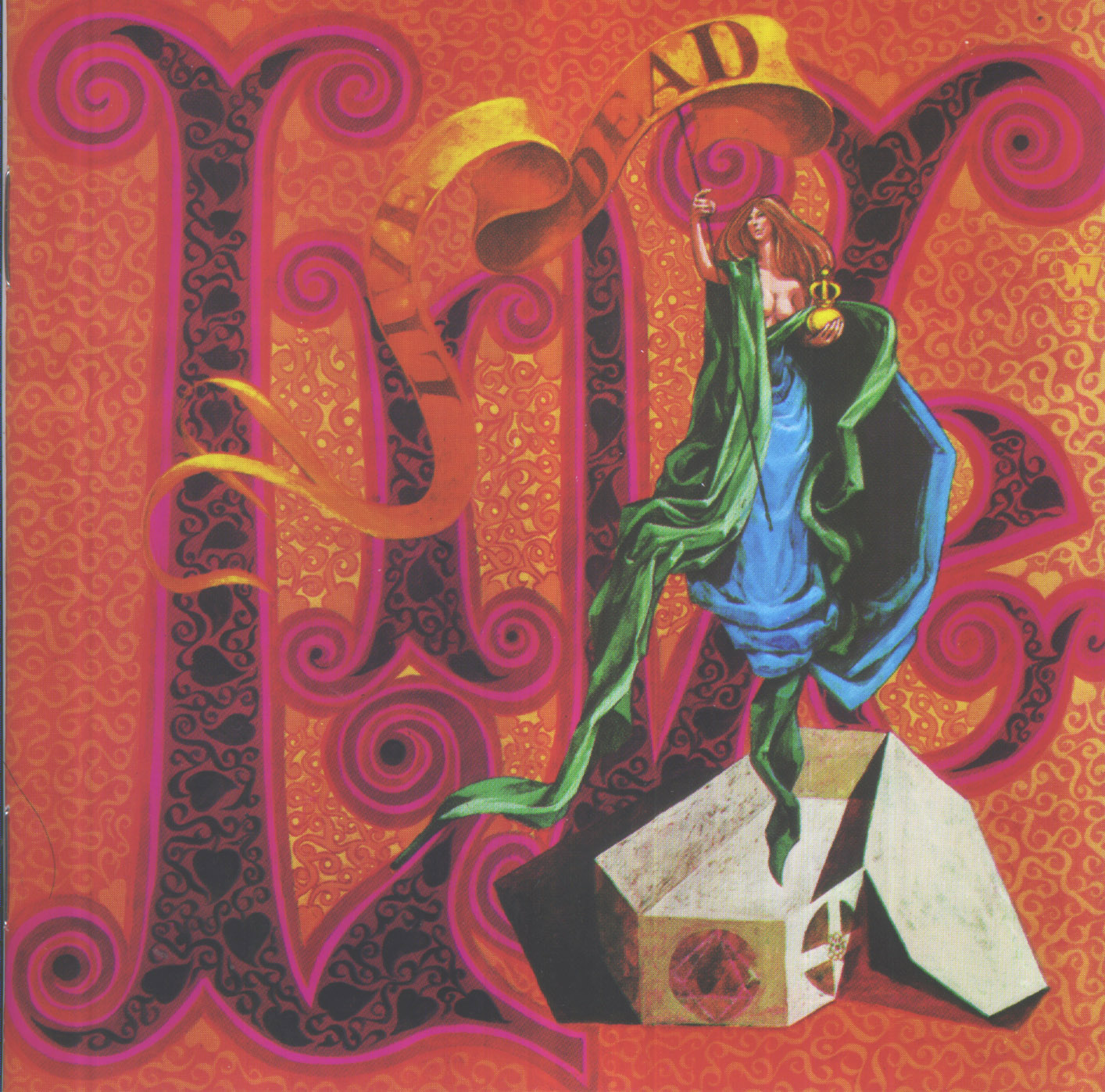
Grateful Dead - Live/Dead 1969

The Grateful Dead's fourth title was likewise their first extended concert recording. Spread over two LPs, Live/Dead (1969) finally was able to relay the intrinsic sonic magnificence of a Dead show in real-time. Additionally, it unleashed several key entries into their repertoire, including the sidelong epic and Deadhead anthem"Dark Star" as well as wailing and otherwise electrified acidic covers of the Rev. Gary Davis blues standard "Death Don't Have No Mercy" and the R&B rave-up "(Turn on Your) Lovelight." Finally, the conundrum of how to bring a lengthy performance experience to the listener has been solved. The album's four sides provided the palette from which to replicate the natural ebb and flow of a typical Dead set circa early 1969. Tomes have been written about the profound impact of "Dark Star" on the Dead and their audience. It also became a cultural touchstone signifying that rock music was becoming increasingly experimental by casting aside the once-accepted demands of the short, self-contained pop song. This version was recorded on February 27, 1969, at the Fillmore West and is presented pretty much the way it went down at the show. The same is true of the seven remaining titles on Live/Dead. The rousing rendition of "St. Stephen" reinvents the Aoxomoxoa (1968) prototype with rip-roaring thunder and an extended ending which slams into an instrumental rhythmic excursion titled "The Eleven" after the jam's tricky time signature. The second LP began with a marathon cover of "(Turn on Your) Lovelight," which had significant success for both Bobby "Blue" Bland and Gene Chandler earlier in the decade. With Ron "Pigpen" McKernan at the throttle, the Dead barrel their way through the work, reproportioning and appointing it with fiery solos from Garcia and lead vocal raps courtesy of McKernan. "Death Don't Have No Mercy" is a languid noir interpretation of Rev. Gary Davis' distinct Piedmont blues. Garcia's fretwork smolders as his solos sear through the melody. Likewise notable is the criminally underrated keyboard work of Tom Constanten, whose airy counterpoint rises like a departing spirit from within the soul of the song. The final pairing of "Feedback" -- which is what is sounds like it might be -- with the "lowering down" funeral dirge "And We Bid You Goodnight" is true to the way that the band concluded a majority of their performances circa 1968-1969. They all join in on an a cappella derivative of Joseph Spence and the Pinder Family's traditional Bahamian distillation. Few recordings have ever represented the essence of an artist in performance as faithfully as Live/Dead. It has become an aural snapshot of this zenith in the Grateful Dead's 30-year evolution and as such is highly recommended for all manner of enthusiasts. The 2001 remastered edition that was included in the Golden Road (1965-1973) (2001) box set tacks on the 45 rpm studio version of "Dark Star" as well as a vintage radio advert for the album.

listen here or here or here

terça-feira, 18 de fevereiro de 2020

Grateful Dead - Skull And Roses (Live) 1971

The Grateful Dead's second live album, released on October 24, 1971. Although the eponymous album was published without a title, it is generally referred to as 'Skull and Roses' due to the iconic cover art by Alton Kelley. The band originally wanted to call the album 'Skull Fuck', but not surprisingly, Warner Brothers objected. The album became the first Dead record to be certified gold by the RIAA (Recording Industry Association of America).

listen here

quinta-feira, 26 de dezembro de 2019

Grateful Dead - Live dead 1969

The Grateful Dead's fourth title was likewise their first extended concert recording. Spread over two LPs, Live/Dead (1969) finally was able to relay the intrinsic sonic magnificence of a Dead show in real time. Additionally, it unleashed several key entries into their repertoire, including the sidelong epic and Deadhead anthem"Dark Star" as well as wailing and otherwise electrified acidic covers of the Rev. Gary Davis blues standard "Death Don't Have No Mercy" and the R&B rave-up "(Turn on Your) Lovelight." Finally, the conundrum of how to bring a lengthy performance experience to the listener has been solved. The album's four sides provided the palette from which to replicate the natural ebb and flow of a typical Dead set circa early 1969. Tomes have been written about the profound impact of "Dark Star" on the Dead and their audience. It also became a cultural touchstone signifying that rock music was becoming increasingly experimental by casting aside the once-accepted demands of the short, self-contained pop song. This version was recorded on February 27, 1969, at the Fillmore West and is presented pretty much the way it went down at the show. The same is true of the seven remaining titles on Live/Dead. The rousing rendition of "St. Stephen" reinvents the Aoxomoxoa (1968) prototype with rip-roaring thunder and an extended ending which slams into an instrumental rhythmic excursion titled "The Eleven" after the jam's tricky time signature.
The second LP began with a marathon cover of "(Turn on Your) Lovelight," which had significant success for both Bobby "Blue" Bland and Gene Chandler earlier in the decade. With Ron "Pigpen" McKernan at the throttle, the Dead barrel their way through the work, reproportioning and appointing it with fiery solos from Garcia and lead vocal raps courtesy of McKernan. "Death Don't Have No Mercy" is a languid noir interpretation of Rev. Gary Davis' distinct Piedmont blues. Garcia's fretwork smolders as his solos sear through the melody. Likewise notable is the criminally underrated keyboard work of Tom Constanten, whose airy counterpoint rises like a departing spirit from within the soul of the song. The final pairing of "Feedback" -- which is what is sounds like it might be -- with the "lowering down" funeral dirge "And We Bid You Goodnight" is true to the way that the band concluded a majority of their performances circa 1968-1969. They all join in on an a cappella derivative of Joseph Spence and the Pinder Family's traditional Bahamian distillation. Few recordings have ever represented the essence of an artist in performance as faithfully as Live/Dead. It has become an aural snapshot of this zenith in the Grateful Dead's 30-year evolution and as such is highly recommended for all manner of enthusiasts. The 2001 remastered edition that was included in the Golden Road (1965-1973) (2001) box set tacks on the 45 rpm studio version of "Dark Star" as well as a vintage radio advert for the album. AMG.

listen here

terça-feira, 31 de outubro de 2017

Grateful Dead - Anthem Of The Sun 1968

As the second long-player by the Grateful DeadAnthem of the Sun (1968) pushed the limits of both the music as well as the medium. General dissatisfaction with their self-titled debut necessitated the search for a methodology to seamlessly juxtapose the more inspired segments of their live performances with the necessary conventions of a single LP. Since issuing their first album, the Dead welcomed lyricist Robert Hunter into the fold -- freeing the performing members to focus on the execution and taking the music to the next level. Another addition was second percussionist Mickey Hart, whose methodical timekeeping would become a staple in the Dead's ability to stop on the proverbial rhythmic dime. Likewise, Tom Constanten (keyboards) added an avant-garde twist to the proceedings with various sonic enhancements that were more akin to John Cage and Karlheinz Stockhausen than anything else coming from the burgeoning Bay Area music scene. Their extended family also began to incorporate folks like Dan Healy -- whose non-musical contributions and innovations ranged from concert PA amplification to meeting the technical challenges that the band presented off the road as well. On this record Healy's involvement cannot be overstated, as the band were essentially given carte blanche and simultaneous on-the-job training with regards to the ins and outs of the still unfamiliar recording process. The idea to create an aural pastiche from numerous sources -- often running simultaneously -- was a radical concept that allowed consumers worldwide to experience a simulated Dead performance firsthand. One significant pattern which began developing saw the band continuing to refine the same material that they were concurrently playing live night after night prior to entering the studio. The extended "That's It for the Other One" suite is nothing short of a psychedelic roller coaster. The wild ride weaves what begins as a typical song into several divergent performances -- taken from tapes of live shows -- ultimately returning to the home base upon occasion, presumably as a built-in reality check. Lyrically, Bob Weir (guitar/vocals) includes references to their 1967 pot bust ("...the heat came 'round and busted me for smiling on a cloudy day") as well as the band's spiritual figurehead Neal Cassidy ("...there was Cowboy Neal at the wheel on a bus to never ever land"). Although this version smokes from tip to smouldering tail, the piece truly developed a persona all its own and became a rip-roaring monster in concert. The tracks "New Potato Caboose" and Weir's admittedly autobiographically titled "Born Cross-Eyed" are fascinatingly intricate side trips that had developed organically during the extended work's on-stage performance life. "Alligator" is a no-nonsense Ron "Pigpen" McKernanworkout that motors the second extended sonic collage on Anthem of the Sun. His straight-ahead driving blues ethos careens headlong into the Dead's innate improvisational psychedelia. The results are uniformly brilliant as the band thrash and churn behind his rock-solid lead vocals. Musically, the Dead's instrumental excursions wind in and out of the primary theme, ultimately ending up in the equally frenetic "Caution (Do Not Stop on Tracks)." Although the uninitiated might find the album unnervingly difficult to follow, it obliterated the pretension of the post-Sgt. Pepper's "concept album" while reinventing the musical parameters of the 12" LP medium. [The expanded and remastered edition included in the Golden Road (1965-1973) (2001) box set contains a live performance from August 23, 1968, at the Shrine in Los Angeles. This miniset features an incendiary medley of "Alligator" and "Caution (Do Not Stop on Tracks)" concluding with over four minutes of electronic feedback.] AMG.

listen here

domingo, 26 de março de 2017

Grateful Dead - Aoxomoxoa 1969

The Grateful Dead's third studio effort was also the first that the band did without any Warner Bros. staff producers or engineers hampering their creative lifestyle and subsequent processes. As they had done with their previous release, Anthem of the Sunthe Dead were actively seeking new forays and pushing envelopes on several fronts simultaneously during Aoxomoxoa (1968) -- which was created under the working title of "Earthquake Country." This was no doubt bolstered by the serendipitous technological revolution which essentially allowed the Dead to re-record the entire contents when given free reign at the appropriately named Pacific High Recording facility. As fate would have it, they gained virtually unlimited access to the newly acquired Ampex MM-1000 -- the very first 16-track tape machines ever produced -- which was absolutely state of the art in late 1968. The band was also experiencing new directions artistically. This was primarily the net result of the budding relationship between primary (by default) melodic contributor Jerry Garcia (guitar/vocals) and Robert Hunter (lyrics), who began his nearly 30-year association with the Grateful Dead in earnest during these sessions. When the LP hit the racks in the early summer of 1969, Deadheads were greeted by some of the freshest and most innovative sounds to develop from the thriving Bay Area music scene. The disc includes seminal psychedelic rockers such as "St. Stephen," "China Cat Sunflower," and "Cosmic Charlie," as well as hints of the acoustic direction their music would take on the Baroque-influenced "Mountains of the Moon" and "Rosemary." The folky "Dupree's Diamond Blues" -- which itself was loosely based on the traditional "Betty & Dupree" -- would likewise foreshadow the sound of their next two studio long-players, Workingman's Dead (1969) and American Beauty (1970). The too-trippy-for-its-own-good "What's Become of the Baby" is buried beneath layers of over-indulgence. This is unfortunate, as Hunter's surreal lyrics and Garcia's understated vocals languish beneath the soupy sonics. In 1972, Aoxomoxoa was overhauled, and the original mix -- which includes several significant differences such as an a cappella vocal tag at the tail end of "Doin' That Rag" -- has yet to be reissued in any form. When the title was reworked for inclusion in the Golden Road (1965-1973) (2001) box set, three previously unreleased and incomplete studio instrumental jams -- respectively titled "Clementine Jam," "Nobody's Spoonful Jam," and "The Eleven Jam" -- as well as a live rendering of "Cosmic Charlie" from a January 1969 performance were added as "bonus material(s)." AMG.

listen here

segunda-feira, 23 de janeiro de 2017

Grateful Dead - Workingman's Dead 1970

As the '60s drew to a close, it was a heavy time for the quickly crumbling hippie movement that had reached its apex just a few years earlier in 1967’s Summer of Love. Death and violence were pervasive in the form of the Manson murders, fatalities at the Altamont concert, and the ongoing loss of young lives in Vietnam despite the best efforts of anti-war activists and peace-seeking protesters. Difficult times were also upon the Grateful Dead, unofficial house band of San Francisco’s Summer of Love festivities and outspoken advocates of psychedelic experimentation both musical and chemical. The excessive studio experimentation that resulted in their trippy but disorienting third album, Aoxomoxoa, had left the band in considerable debt to their record label, and their stress wasn't helped at all by a drug bust that had members of the band facing jail time. The rough road the Dead were traveling down seemed congruent with the hard changes faced by the youth counterculture that birthed them. Fourth studio album Workingman's Dead reflects both the looming darkness of its time, and the endless hope and openness to possibility that would become emblematic of the Dead as their legacy grew. For a group already established as exploratory free-form rockers of the highest acclaim, Workingman’s Dead's eight tunes threw off almost all improvisatory tendencies in favor of spare, thoughtful looks at folk, country, and American roots music with more subdued sounds than the band had managed up until then. The songs also focused more than ever before on singing and vocal harmonies, influenced in no small way by a growing friendship with Crosby, Stills, Nash & Young. The band embraced complex vocal arrangements with campfire-suited folk on "Uncle John's Band" and the psychedelic cowboy blues of “High Time.”
Before they blasted off into hallucinatory rock as the Grateful Dead, several founding members had performed as Mother McCree's Uptown Jug Champions, a group that played traditional jug band music with earnest, heartfelt appreciation. Those early influences came into sharp focus on the bluegrass rhythms and hillbilly harmonies of "Cumberland Blues" and the glistening pedal steel and shuffling drums of "Dire Wolf." The more rocking songs add to the album's brooding feel with "New Speedway Boogie" directly addressing the violence at Altamont, and "Casey Jones," which appeared at first to be a lighthearted celebration of cocaine, but was really a lament for troubled times that felt like they were spinning off the rails.
The abrupt shift toward sublime acoustic sounds on Workingman's Dead completely changed what the Grateful Dead meant to their listeners at large. The enormous risk they took in changing their sound entirely resulted in a heartbreakingly beautiful, unquestionably pure statement and one of the more important documents of its time. They’d continue this trend on the even more roots-minded American Beauty, recorded later the same year, but the limitlessness, fearlessness, and true power of the band began here.


listen here

terça-feira, 18 de novembro de 2014

Grateful Dead - The Grateful Dead 1967

The Grateful Dead's eponymously titled debut long-player was issued in mid-March of 1967. This gave rise to one immediate impediment -- the difficulty in attempting to encapsulate/recreate the Dead's often improvised musical magic onto a single LP. Unfortunately, the sterile environs of the recording studio disregards the subtle and often not-so-subtle ebbs and zeniths that are so evident within a live experience. So, while this studio recording ultimately fails in accurately exhibiting The Grateful Dead's tremendous range, it's a valiant attempt to corral the group's hydra-headed psychedelic jug-band music on vinyl. Under the technical direction of Dave Hassinger -- who had produced the Rolling Stones as well as the Jefferson Airplane -- the Dead recorded the album in Los Angeles during a Ritalin-fuelled "long weekend" in early 1967. Rather than prepare all new material for the recording sessions, a vast majority of the disc is comprised of titles that the band had worked into their concurrent performance repertoire. This accounts for the unusually high ratio (seven:two) of folk and blues standards to original compositions. The entire group took credit for the slightly saccharine "Golden Road (To Unlimited Devotion)," while Jerry Garcia (guitar/vocals) is credited for the noir garage-flavored raver "Cream Puff War." Interestingly, both tracks were featured as the respective A- and B-sides of the only 45 rpm single derived from this album. The curious aggregate of cover tunes featured on the Dead's initial outing also demonstrates the band's wide-ranging musical roots and influences. These include Pigpen's greasy harp-fuelled take on Sonny Boy Williamson's "Good Morning Little School Girl" and the minstrel one-man-band folk of Jessie "the Lone Cat" Fuller's "Beat It On Down the Line." The apocalyptic Cold War folk anthem "Morning Dew" (aka "[Walk Me Out in The] Morning Dew") is likewise given a full-bodied electric workout as is the obscure jug-band stomper "Viola Lee Blues." Fittingly, the Dead would continue to play well over half of these tracks in concert for the next 27 years. [Due to the time limitations inherent within the medium, the original release included severely edited performances of "Good Morning Little School Girl," "Sitting on Top of the World," "Cream Puff War," "Morning Dew," and "New, New Minglewood Blues." These tracks were restored in 2001, when the Dead's Warner Brothers catalog was reassessed for the Golden Road (1965-1973)box set.] AMG.

listen here

Buy @ Amazon: USA - FR - UK

Grateful Dead - Aoxomoxoa 1969

The Grateful Dead's third studio effort was also the first that the band did without any Warner Bros. staff producers or engineers hampering their creative lifestyle and subsequent processes. As they had done with their previous release, Anthem of the Sunthe Dead were actively seeking new forays and pushing envelopes on several fronts simultaneously during Aoxomoxoa (1968) -- which was created under the working title of "Earthquake Country." This was no doubt bolstered by the serendipitous technological revolution which essentially allowed the Dead to re-record the entire contents when given free reign at the appropriately named Pacific High Recording facility. As fate would have it, they gained virtually unlimited access to the newly acquired Ampex MM-1000 -- the very first 16-track tape machines ever produced -- which was absolutely state of the art in late 1968. The band was also experiencing new directions artistically. This was primarily the net result of the budding relationship between primary (by default) melodic contributor Jerry Garcia (guitar/vocals) and Robert Hunter(lyrics), who began his nearly 30-year association with The Grateful Dead in earnest during these sessions. When the LP hit the racks in the early summer of 1969, Deadheads were greeted by some of the freshest and most innovative sounds to develop from the thriving Bay Area music scene. The disc includes seminal psychedelic rockers such as "St. Stephen," "China Cat Sunflower," and "Cosmic Charlie," as well as hints of the acoustic direction their music would take on the Baroque-influenced "Mountains of the Moon" and "Rosemary." The folky "Dupree's Diamond Blues" -- which itself was loosely based on the traditional "Betty & Dupree" -- would likewise foreshadow the sound of their next two studio long-players, Workingman's Dead (1969) and American Beauty (1970). The too-trippy-for-its-own-good "What's Become of the Baby" is buried beneath layers of over-indulgence.   This is unfortunate, as Hunter's surreal lyrics and Garcia's understated vocals languish beneath the soupy sonics. In 1972, Aoxomoxoa was overhauled, and the original mix -- which includes several significant differences such as an a cappella vocal tag at the tail end of "Doin' That Rag" -- has yet to be reissued in any form. When the title was reworked for inclusion in the Golden Road (1965-1973)(2001) box set, three previously unreleased and incomplete studio instrumental jams -- respectively titled "Clementine Jam," "Nobody's Spoonful Jam," and "The Eleven Jam" -- as well as a live rendering of "Cosmic Charlie" from a January 1969 performance were added as "bonus material(s)." AMG.

listen here

Buy @ Amazon: USA - FR - UK

Grateful Dead - Live Dead (Live) 1969

The Grateful Dead's fourth title was likewise their first extended concert recording. Spread over two LPs, Live/Dead (1969) finally was able to relay the intrinsic sonic magnificence of a Dead show in real time. Additionally, it unleashed several key entries into their repertoire, including the sidelong epic and Deadhead anthem"Dark Star" as well as wailing and otherwise electrified acidic covers of the Rev. Gary Davis blues standard "Death Don't Have No Mercy" and the R&B rave-up "(Turn on Your) Lovelight." Finally, the conundrum of how to bring a lengthy performance experience to the listener has been solved. The album's four sides provided the palette from which to replicate the natural ebb and flow of a typical Dead set circa early 1969. Tomes have been written about the profound impact of "Dark Star" on the Dead and their audience. It also became a cultural touchstone signifying that rock music was becoming increasingly experimental by casting aside the once-accepted demands of the short, self-contained pop song. This version was recorded on February 27, 1969, at the Fillmore West and is presented pretty much the way it went down at the show. The same is true of the seven remaining titles on Live/Dead. The rousing rendition of "St. Stephen" reinvents the Aoxomoxoa (1968) prototype with rip-roaring thunder and an extended ending which slams into an instrumental rhythmic excursion titled "The Eleven" after the jam's tricky time signature. The second LP began with a marathon cover of "(Turn on Your) Lovelight," which had significant success for both Bobby "Blue" Bland and Gene Chandler earlier in the decade. With Ron "Pigpen" McKernan at the throttle, the Deadbarrel their way through the work, reproportioning and appointing it with fiery solos from Garcia and lead vocal raps courtesy of McKernan. "Death Don't Have No Mercy" is a languid noir interpretation ofRev. Gary Davis' distinct Piedmont blues. Garcia's fretwork smolders as his solos sear through the melody. Likewise notable is the criminally underrated keyboard work of Tom Constanten, whose airy counterpoint rises like a departing spirit from within the soul of the song. The final pairing of "Feedback" -- which is what is sounds like it might be -- with the "lowering down" funeral dirge "And We Bid You Goodnight" is true to the way that the band concluded a majority of their performances circa 1968-1969. They all join in on an a cappella derivative of Joseph Spence and the Pinder Family's traditional Bahamian distillation. Few recordings have ever represented the essence of an artist in performance as faithfully as Live/Dead. It has become an aural snapshot of this zenith in The Grateful Dead's 30-year evolution and as such is highly recommended for all manner of enthusiasts. The 2001 remastered edition that was included in the Golden Road (1965-1973) (2001) box set tacks on the 45 rpm studio version of "Dark Star" as well as a vintage radio advert for the album. AMG.

listen here

Buy @ Amazon: USA - FR - UK