terça-feira, 4 de outubro de 2022
Atomic Rooster - Nice & Greasy 1973
Atomic Rooster experienced several lineup changes during their initial tenure in the early '70s, with Nice 'n' Greasy being the band's last before disbanding. By this time the band's musical direction had shifted from hard rock and progressive rock to a style more closely resembling blues/funk. The addition of Chris Farlowe gives the music an aggressive edge, while John Mandella's guitar work beckons images of John McLaughlin. The effort is genuine, and songs such as "Take One Toke" and "Can't Find a Reason" show the band's diversity, but there are too many inconsistent moments and nonsensical lyrics. It's too bad that Vincent Crane did not keep the band together for a longer period of time, as they were obviously a talented group of musicians with a definitive sound, just lacking a firm direction. AMG.
listen here or here
segunda-feira, 3 de outubro de 2022
Bob Dylan - Slow Train Coming 1979
Perhaps it was inevitable that Bob Dylan would change direction at the end of the '70s, since he had dabbled in everything from the full-on repudiation of his legacy to a quiet embrace of it, to dip his toe into pure showmanship. Nobody really could have expected that he would turn to Christianity on Slow Train Coming, embracing a born-again philosophy with enthusiasm. He has no problem in believing in a vengeful god -- you gotta serve somebody, after all -- and this is pure brimstone and fire throughout the record, even on such lovely testimonials as "I Believe in You." The unexpected side effect of his conversion is that it gave Dylan a focus he hadn't had since Blood on the Tracks, and his concentration carries over to the music, which is lean and direct in a way that he hadn't been since, well, Blood on the Tracks. Focus isn't necessarily the same thing as consistency, and this does suffer from being a bit too dogmatic, not just in its religion, but in its musical approach. Still, it's hard to deny Dylan's revitalized sound here, and the result is a modest success that at least works on its own terms. AMG.
listen here or here
Leon Thomas - Blues and the Soulful Truth 1972
The late Leon Thomas was a vocalist who has proven to be influential among jazz and blues saxophonists, guitarists, and pianists, who've admitted their debt to his innovation. However, though there are many vocalists who have benefited from his style as well, he is seldom acknowledged for his highly original -- and idiosyncratic -- contribution to them. One can only speculate as to why, though Thomas' full-throated style which employed everything from yodels to Joe Turner-ish growls and shouts may have been too wide for anyone to grasp in its entirety without overtly sounding as if they were aping him. Blues and the Soulful Truth is among the artist's most enduring performances, either as a leader or sideman. There is his trademark, otherworldly modal improvisation on Gabor Szabo's exotica classic "Gypsy Queen," the deep, greasy gutbucket, funky blues of "Let's Go Down to Lucy" and "L-O-V-E," and the traditional tune "C.C. Rider" -- though Thomas' arrangement is anything but -- among a lengthy, eight-song set. Perhaps the most revealing example of his singularity is his ability to interpret a song like John Lee Hooker's "Boom, Boom" as funky, jazzed-out, angular R&B -- enabled mightily by the saxophone stylings of Pee Wee Ellis and the criminally under-appreciated pianism of Neal Creque and the wild violin of John Blair -- after coming out of a pop-oriented soul tune such as "Love Each Other," written with a groove prevalent among commercial jazz and R&B recordings of the time, both sounding sincere, authentic, and completely full of the singer's presence. Indeed, on the aforementioned "Gypsy Queen" or his own "Shape Your Mind to Die," Thomas inhabits his material fully as if nobody ever had ever sung or heard these songs and would ever sing them again. Also, the production innovation and percussive touches on many of these tunes have yet to be repeated (Pharoah Sanders, Thomas' previous employer who introduced the singer to the world, adopted some of the artist's percussive techniques permanently), like the firecrackers raining against Airto Moreira's drums and Larry Coryell's ethereal guitar riffs, or the use of a "prepared" vibraphone and coat hangers in "China Doll," as they slip against the singer's wail and moan, and the elegant stick and brushwork of Bernard "Pretty" Purdie. In sum, Blues and the Soulful Truth (Which does echo Oliver Nelson's Blues and the Abstract Truth in vision as well as the title), is a tour through the depth and dimension of Thomas' mind-blowing abilities as a singer in a wide range of African American musical traditions, proving at the time, and now again, that he was far more than a free jazz singer. Indeed, the artist not only was a stylist of originality, but a composer, arranger, ethnomusicologist, and singer of startling beauty and power -- no matter the song. This album is a singular achievement, even among the fine recordings in Thomas' own catalog, and should be considered first by those curious enough to look into his work -- you won't be disappointed no matter what you find, but this one will take you places you never anticipated going. AMG.
listen here or here
Donald Byrd - Fancy Free 1970
1969's Fancy Free marked the beginning of Donald Byrd's move away from hard bop, staking out fusion-flavored territory that -- at this juncture -- owed more to Miles Davis than the R&B-dominated jazz-funk Byrd would embrace several years down the road. Recorded just a few months after Davis' In a Silent Way, Fancy Free finds Byrd leading a large ensemble prominently featuring Frank Foster on tenor, Lew Tabackin or Jerry Dodgion on flute, and several percussionists. But the most important piece of the puzzle is Duke Pearson's electric piano, the first time Byrd utilized the instrument. Pearson dominates the texture of the group sound, which makes the entirety of the session seem farther outside the realm of funky hard bop than it actually is. However, that's not to say that Fancy Free isn't a clear break with Byrd's past -- especially the two Byrd originals that open the album. The title track -- which later became one of Byrd's more covered compositions -- contrasts Pearson's spacy musings with a busy, funky percussion groove, and there's a loose, open feel to the improvisations that breaks with hard bop conventions. The warm ballad "I Love the Girl" has a similarly airy feel, and at eight and a half minutes, is the shortest cut; clearly, Byrd wanted an open framework for exploration. The other two numbers are more traditional hard bop compositions by former Byrd students, which -- although funky and full of improvisations -- can't help but feel more tethered than their predecessors. Still, even if it isn't his most adventurous fusion outing, Fancy Free is the rare Donald Byrd album that holds appeal for rare-groove fanatics and traditionalists alike. AMG.
listen here or here
segunda-feira, 26 de setembro de 2022
Dom Um Romão - Spirit of the Times 1973
Dom Um Romão became a professional in the late '40s, playing the drums at dance orchestras, later being hired by the Rádio Tupi's orchestra. He was responsible for taking Elis Regina from TV to the Beco das Garrafas (Rio's 52nd Street), where, in 1955, he formed his Copa Trio (which also had pianist Toninho and bassist Manuel Gusmão). In the same period, he was hired by the Vogue nightclub. In 1958, he participated in the bossa nova initial milestone, Elizeth Cardoso's album Canção do Amor Demais. In 1961, Romão played with Sérgio Mendes in his Brazilian Jazz Sextet, which performed in the South American Jazz Festival (Uruguay). In 1962, with Sérgio's Bossa Rio Sextet, he participated in the Bossa Nova Festival at the Carnegie Hall. With Cannonball Aderley, he recorded Cannonball's Bossa-nova (Riverside). With the Copa Trio, he performed in the historic bossa nova show O Fino da Bossa, at the Teatro Paramount (1964). It was the first time that bossa nova was launched in the city of São Paulo. His first album, Dom Um, is from the same year. With pianist Dom Salvador and pianist Miguel Gusmão as the new formation of the Copa Trio, he accompanied several singers at the Bottle's nightclub, at the Beco das Garrafas, including the Quarteto em Cy. Joined by Jorge Ben, they became the Copa 4. Philips released his Dom Um in the same year. In 1965, he participated in Flora Purim's (then his wife) opening album, Flora É MPB (RCA). In the same year, he was invited by Norman Granz to move to the U.S. again, where he performed with Stan Getz and Astrud Gilberto, following them to Europe. A most requested session man, he recorded many albums, including one with Tom Jobim. Romão joined Sérgio Mendes's Brasil 66, recording the LP Fool on the Hill (A&M), and touring Brazil (1966). In the next year, he participated in the LP Francis Albert Sinatra & Antônio Carlos Jobim. Leaving Sérgio Mendes's group, he recorded with Tony Bennett (The Movie Song Album), among others. In 1971, Romão replaced Airto Moreira in the Weather Report. Dom Um Romão came in 1972.
In 1973, he released Spirit of the Times and toured with Blood, Sweat and Tears. Hotmosphere was released in 1976. Owner of Black Beans studios in New Jersey, he moved to Switzerland in the early '80s. His Dom Um Romão Quintet performed abroad and backed many important artists like Blood, Sweat and Tears and Tony Bennett. Saudades was released in 1993, and in 1998, he recorded the CD Rhythm Traveller in Brazil. AMG.
listen here or hereGrachan Moncur III - Evolution 1964
One of the New Thing's extremely few trombonists and a greatly underappreciated composer of tremendous evocative power, Grachan Moncur III got his first major exposure on Jackie McLean's groundbreaking 1963 masterpiece, One Step Beyond. Toward the end of the year, most of the same musicians reconvened for Moncur's debut as a leader, Evolution; McLean, vibist Bobby Hutcherson, and drummer Tony Williams are all back, with Bob Cranshaw on bass and an extra voice in trumpeter Lee Morgan, moonlighting from his usual groovy hard bop style. While Moncur takes a little more solo space here, the main emphasis is on his talent as a composer. The four originals are all extended, multi-sectioned works (the shortest is around eight minutes), all quite ambitious, and all terrifically moody; much of the album sounds sinister and foreboding, and even the brighter material has a twisted, surreal fun-house undercurrent. Part of that is due to the accuracy with which the musicians interpret Moncur's vision. Hutcherson provides his trademark floating chordal accompaniment, which is crucial to the overall texture; what's more, the album features some of McLean's weirdest playing ever, and some of Morgan's most impressively advanced, as he makes the most of a situation he longed to be in more often. Of the pieces, "Monk in Wonderland" is the most memorable; its whimsical, angular theme is offset by Hutcherson's mysterious vibes, which create a trippy effect in keeping with the title. "Air Raid" is alternately ominous and terrifyingly frantic, and the funereal title track keeps time only in the pulse of the horns and the backing, which is based entirely on whole notes. With such an inventive debut, it's a shame Moncur didn't record more as a leader, which makes Evolution an even more important item for fans of Blue Note's avant-garde to track down. AMG.
listen here or here
Dusty Springfield - The Look of Love 1967
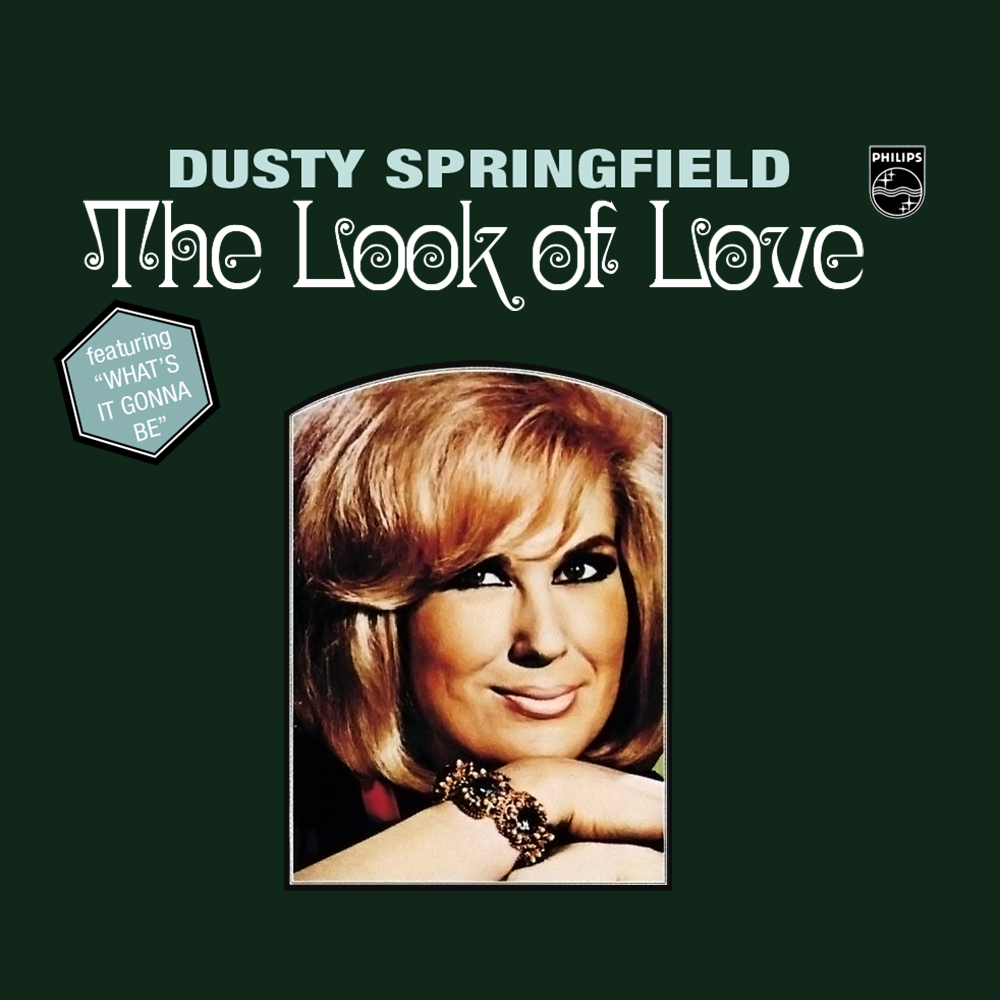
A true mixed bag, from the sensual title track to the melodramatic "If You Go Away," and some fine soul stylings in between, most notably "Small Town Girl" (check out the choruses) and "I've Got a Good Thing." This is the last of Springfield's Philips albums to be released in America (she signed with Atlantic in the U.S. soon after, and the label declined to release most of her Philips' output here). AMG.
listen here or here
Julius Hemphill - Coon Bid'ness 1975
This historic LP includes a 20-minute performance with altoist Julius Hemphill, trumpeter Baikida Carroll, baritonist Hamiet Bluiett, cellist Abdul Wadud and drummer Philip Wilson ("The Hard Blues") taken from the same session that resulted in Dogon A.D. In addition, there are four briefer tracks that feature Hemphill, Bluiett, Wadud, altoist Arthur Blythe, drummer Barry Altschul, and the congas of Daniel Zebulon. The music throughout is quite avant-garde but differs from the high-energy jams of the 1960s due to its emphasis on building improvisations as a logical outgrowth of advanced compositions. It's well worth several listens. AMG.
listen here or here
Phil Manzanera - Diamond Head 1975
Phil Manzanera's first post-Roxy foray into solo albums is a terrific all-star affair that still holds up enormously well. Calling on favors from Roxy members present and past, and those from the Cambridge/British art rock scene, Manzanera assembled a supergroup for every song. Robert Wyatt sings Spanish gibberish on the opener "Frontera," a rewrite of his own "Team Spirit." Brian Eno teams up for the sunny "Big Day" and the nonsensical "Miss Shapiro," both of which would not have been out of place on his own early solo albums. John Wetton (of several groups including Family and Asia) sings a duet with Doreen Chanter (of the Chanter Sisters and the Joe Cocker Band), and Bill MacCormick of Matching Mole and Quiet Sun sings his own "Alma," the album's closing ballad. Fans of any of the singers above, not to mention Manzanera, whose party this is, won't be disappointed. A majority of these tracks went on to form the set list for 801 Live. AMG.
listen here or here
sábado, 24 de setembro de 2022
Frank Zappa and The Mothers of Invention - We're Only In It For The Money 1968
From the beginning, Frank Zappa cultivated a role as the voice of the freaks -- imaginative outsiders who didn't fit comfortably into any group. We're Only in It for the Money is the ultimate expression of that sensibility, a satirical masterpiece that simultaneously skewered the hippies and the straights as prisoners of the same narrow-minded, superficial phoniness. Zappa's barbs were vicious and perceptive, and not just humorously so: his seemingly paranoid vision of authoritarian violence against the counterculture was borne out two years later by the Kent State killings. Like Freak Out, We're Only in It for the Money essentially devotes its first half to satire, and its second half to presenting alternatives. Despite some specific references, the first-half suite is still wickedly funny, since its targets remain immediately recognizable. The second half shows where his sympathies lie, with character sketches of Zappa's real-life freak acquaintances, a carefree utopia in "Take Your Clothes Off When You Dance," and the strident, unironic protest "Mother People." Regardless of how dark the subject matter, there's a pervasively surreal, whimsical flavor to the music, sort of like Sgt. Pepper as a creepy nightmare. Some of the instruments and most of the vocals have been manipulated to produce odd textures and cartoonish voices; most songs are abbreviated, segue into others through edited snippets of music and dialogue, or are broken into fragments by more snippets, consistently interrupting the album's continuity. Compositionally, though, the music reveals itself as exceptionally strong, and Zappa's politics and satirical instinct have rarely been so focused and relevant, making We're Only in It for the Money quite probably his greatest achievement. AMG.
listen here or here
Gong - You (Radio Gnome Invisible, Pt. 3) 1974
You is the final installment in Gong's legendary Radio Gnome Trilogy, and it marks an important turning point for the band. By 1974, the psychedelic hippie/folk-rock element of the sound that was leader Daevid Allen's most important contribution was beginning to disappear. In its place was a more sophisticated musical vision that owed as much to jazz-rock fusion as to fellow space rockers like Pink Floyd and Hawkwind. Ironically, this is Gong's most "spacy" album, full of extended, ethereal passages that would inspire future generations of space rockers. The sound was equally defined however, by the jazzy flights of saxophonist Didier Malherbe and the sinuous rhythms of bassist Mike Howlett and drummer Pierre Moerlen (the band would eventually become the fusion-oriented Pierre Moerlen's Gong). Allen's songs still provide a crucial link to the rest of the trilogy, though the conceptual/mythological aspect is less crucial to You. AMG.
listen here or here
Caravan - Waterloo Lily 1972
Before the recording of Waterloo Lily, David Sinclair departed Caravan to join forces with Soft Machine skinsman Robert Wyatt and form Matching Mole. With the subsequent arrival of former Delivery member Steve Miller and an overwhelming jazz influence, the edgier progressive rock and folk elements that were so prevalent on their previous albums are somewhat repressed. The band's performance level did not suffer in the transition. In fact, the addition of Miller only punctuates Caravan's previously honed improvisational skills. Beginning with Waterloo Lily's leadoff title track, there is a sound more akin to the jazzier efforts of Traffic. Miller's "Nothing at All" incorporates the jazz fusion even further as the long instrumental introduction more than hints at Steely Dan circa Katy Lied. The up-tempo staccato bop featuring Miller's electric piano accents, when juxtaposed with Pye Hastings' liquid-toned electric guitar could easily be mistaken for that of Walter Becker and Donald Fagan. The remainder of the album centers on a couple of pieces that evoke the sound and spirit of the previous Caravan outings. Most reminiscent of the classic sound is Hastings' epic "The Love in Your Eye" suite. The track recalls the laid-back intensity and phenomenal improvisational synergy of earlier tracks such as "For Richard" and "Where, but for Caravan Would I," while wisely incorporating Miller's formidable jazz chops to give the instrumental sections sustained substance throughout. The remastered CD offers three additional compositions circa the Waterloo Lily sessions. "Pye's June Thing" and "Ferdinand" are two of Hastings' acoustic demos. A considerably more complete "Looking Left, Looking Right" is a treasured recovery from the vaults. Originally vaulted due to the time limitations of vinyl, this track, along with "Pye's Loop" -- which acts as a coda to "Looking Left..." -- mark their debut release here. AMG.
listen here or here
Jim Post - Colorado Exile 1973
Jim Post first came to prominence in and around the early 1970s with his album on Fantasy Records called Jim Post "Colorado Exile'. produced by Jim Post and Ed Bogas. The album contains inspired song come verse, recalling the wonder of the wilderness and the glory of the mountains and woods of Colorado.
quarta-feira, 21 de setembro de 2022
Sugar Bear - Sugar Bear 1970
Another private pressing from the 70s, this time a charming chunk of rural rock from the sunshine state. Originally released on No Label Recordings, this four-piece from Florida (named after the hip American 70s singin'n'guitar-playin' cartoon character, Sugar Bear) has managed to produce an album of high originality which defies categorization.
In terms of musical styles, ''rural rock'' probably covers just about everything, from rock'n'roll to the blues and plain ol' country
rock in the style of The Outlaws or Pure Prairie League, of course, there are some psychedelic touches, think a cross line between Jefferson Airplane and Byrds with drops of Santana.
Today’s “Sugarbear” consists of Ivan Bailey on bass, John McLaughlin on lead guitar, and Eric Chick on drums. Ivan and John have been together for about 44 years. Started out in Miami as “The Goldtones”, later changed to “The Roustabouts”. Moved to the Ocala area and became “The Merger” and in 1972 changed the name to “Sugarbear”. listen here or here
In terms of musical styles, ''rural rock'' probably covers just about everything, from rock'n'roll to the blues and plain ol' country
rock in the style of The Outlaws or Pure Prairie League, of course, there are some psychedelic touches, think a cross line between Jefferson Airplane and Byrds with drops of Santana.
Today’s “Sugarbear” consists of Ivan Bailey on bass, John McLaughlin on lead guitar, and Eric Chick on drums. Ivan and John have been together for about 44 years. Started out in Miami as “The Goldtones”, later changed to “The Roustabouts”. Moved to the Ocala area and became “The Merger” and in 1972 changed the name to “Sugarbear”. listen here or here
Van der Graaf Generator - Pawn Hearts 1971
Van der Graaf Generator's fourth album, Pawn Hearts was also their second most popular; at one time this record was a major King Crimson cult item due to the presence of Robert Fripp on guitar, but Pawn Hearts has more to offer than that. The opening track, "Lemmings," calls to mind early Gentle Giant, with its eerie vocal passages (including harmonies) set up against extended sax, keyboard, and guitar-driven instrumental passages, and also with its weird keyboard and percussion interlude, though this band is also much more contemporary in their focus than Gentle Giant. Peter Hammill vocalizes in a more traditional way on "Man-Erg," against shimmering organ swells and Guy Evans' very expressive drumming, before the song goes off on a tangent by way of David Jackson's saxes and some really weird time signatures -- plus some very pretty acoustic and electric guitar work by Hammill himself and Fripp. The monumental "Plague of Lighthouse Keepers," taking up an entire side of the LP, shows the same kind of innovation that characterized Crimson's first two albums, but without the discipline and restraint needed to make the music manageable. The punning titles of the individual sections of this piece (which may have been done for the same reason that Crimson gave those little subtitles to its early extended tracks, to protect the full royalties for the composer) only add to the confusion. As for the piece itself, it features enough virtuoso posturing by everyone (especially drummer Guy Evans) to fill an Emerson, Lake & Palmer album of the same era, with a little more subtlety and some time wasted between the interludes. The 23-minute conceptual work could easily have been trimmed to, say, 18 or 19 minutes without any major sacrifices, which doesn't mean that what's here is bad, just not as concise as it might've been. But the almost operatic intensity of the singing and the overall performance also carries you past the stretches that don't absolutely need to be here. The band was trying for something midway between King Crimson and Genesis, and came out closer to the former, at least instrumentally. Hammill's vocals are impassioned and involving, almost like an acting performance, similar to Peter Gabriel's singing with Genesis, but the lack of any obviously cohesive ideas in the lyrics makes this more obscure and obtuse than any Genesis release. AMG.
listen here or here
Subscrever:
Mensagens (Atom)


.jpg)
.jpg)


