terça-feira, 10 de maio de 2022

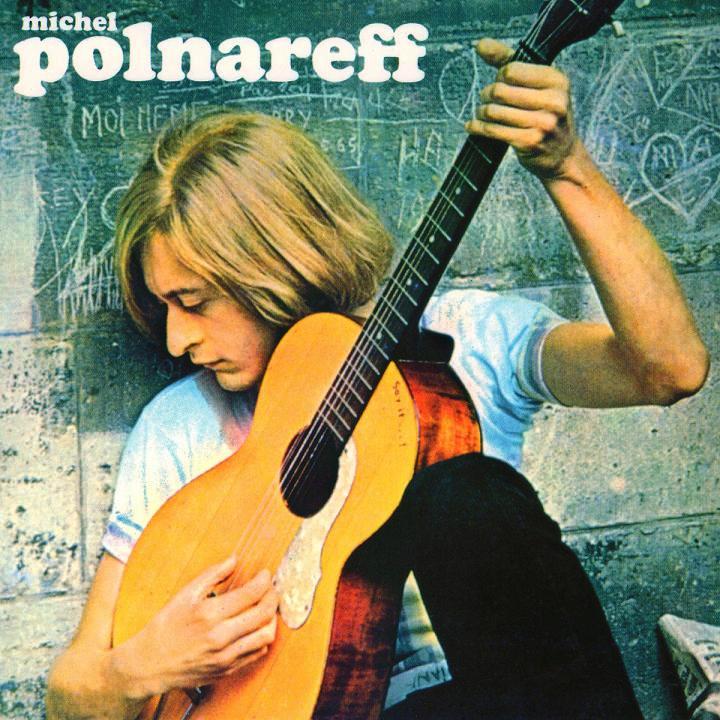
Michel Polnareff - Love Me, Please Love Me 1966

Known for his eccentric nature, French pop songwriter Michel Polnareff created a buzz for himself in the early to mid-'60s when his debut single, "La Poupée Qui Fait Non," rocketed to the top of the French charts, but it was his early-'70s release, Polnareff's, that cemented him a place as a legend in French pop. Polnareff was raised in Paris somewhat like a child of the arts, his mother, Simone Lane, was a dancer, and his father, Leib Polnareff, a musician who played sideman under the name Léo Poll for many artists, including Edith Piaf. The two immersed young Polnareff in music, shaping his ambitions, so it is no surprise that he learned piano by the age of five and was writing music at 11.

After a short stint in the French Army and a few menial jobs, Polnareff embraced his passions and busked the city streets with his guitar to moderate success. In 1965, he refused a recording contract with Barclay, a prize that he won in a songwriting contest, in one of the earliest displays of his now-famous aversion to conformity, but eventually signed to AZ under the direction of his new manager and Radio 1 musical director Lucien Morisse. "La Poupée Qui Fait Non" was released in the summer of 1966 and rocketed him up the charts not only in France, but in Germany, Britain, and Spain. The song was the first of a string of hits for Polnareff, but before long, the French press focused almost entirely on his garish stage presence. Being under the scrutiny of the conservative press didn't seem to stop the hits, however, and Polnareff garnered praise from celebrities such as Charles Trenet, but the persistent criticisms weighed heavily on him. By 1970, his stage costumes had become more flamboyant. The French press began questioning his sexuality, and the constant controversy around the singer came to a head when he was physically assaulted while performing. Not surprisingly, Polnareff canceled the rest of his tour and shortly afterward checked into a hospital for depression when he learned that Morisse, his manager, had committed suicide. After five months of treatment, Polnareff bounced back and resumed his hectic recording and touring schedule, but scandal soon followed when he ended up in court due to a campaign for his 1972 tour that was centered around publicity posters bearing Polnareff's naked behind. Polnareff was found guilty of gross indecency and charged 60,000 francs.

His touring continued through mid-1973 with stops in Polynesia and North America, but upon his return to France, Polnareff found his bank account had been drained by his financial advisor. Polnareff's owed the French government was over one million francs in unpaid taxes, and with little money to his name, he fled to the United States. Unknown in a new country, he was safely out of the limelight and within the reach of the French authorities. He spent more than a decade in the U.S. before he cleared up his monetary issues with the French government, and in the meantime, he recorded for Atlantic and composed movie scores. Despite his absence from France, Polnareff's new music remained present in French popular culture and continued to chart through the mid-'80s, until he removed himself entirely from the public eye and quietly returned to France to work on a new album. Kama Sutra finally appeared in the summer of 1990, and the album garnered three French hits. Polnareff remained in France for five more years before returning to the U.S. to perform at the Roxy in Los Angeles. Musical director and guitarist Dick Smith (Hampton Grease Band, Earth, Wind & Fire) executive-produced the ambitious Live at the Roxy, which achieved platinum certification in France. To mark this occasion, television channel Canal + ran a special, À la Recherche de Polnareff ("In Search of Polnareff"), in which he appeared in military uniform (thus resulting in the nickname "The Admiral"); he was interviewed in the California desert by Michel Denisot, and performed an acoustic mini-concert. Upon returning to France, he didn't release another album for 20 years, instead choosing to spend his time becoming a father, and in relative seclusion working on various other projects. In 2004 and 2005, state television station France 3 broadcast a 90-minute documentary entitled Michel Polnareff Dévoilé. During those years, the artist's music got a boost from unexpected sources. His tune "Voyages" was sampled for Necro's single "Light My Fire," as well as the Shortwave Set's "Is It Any Wonder?" In addition, Masher (L)SD sampled "Sous Quelle Etoile Suis Je Ne?" for the tune "Howards' Thinking Clearly." In 2014, he was the subject of another film documentary, Quand l'écran s'allume, that made the rounds of European cinemas. In December 2015, Polnareff announced that a new studio album would be forthcoming in the summer of 2016. To that end, he issued the single "L'Homme en Rouge" as a pre-release. By the time the deadline date rolled around, Polnareff admitted the album was not yet completed. Instead, he released the concert offering, A L'Oympia 2016, followed by the compilation Polnabest. While the unfinished album continued to languish in 2017, Universal Music France issued the 23-disc Pop Rock en Stock, which contained his entire studio output balanced by a wealth of live material and rarities as a celebration of Polnareff's 50th anniversary in music. AMG.

listen here or here

The Lloyd McNeill Quartet - Washington Suite 1970

Lloyd McNeill is a composer, flutist, poet, photographer, teacher, and globally celebrated visual artist. He is regarded by jazz musicians as an innovator in his chosen instrument. Between 1969 and 1978, he self-released several albums --including 1969's Asha, 1970's Washington Suite, 1976's Treasures, and 1978's Tori -- that are considered classics by improvising musicians as well as critics for their innovative meld of vanguard and spiritual jazz, folk, blues, free improv, and modernist classical technique. They are considered classics by musicians and many critics for their innovative meld of vanguard and spiritual jazz, folk, blues, free improv, and modernist classical technique. McNeill's last recorded outing was 1998's X.Tem.Por.E, in collaboration with pianist Richard Kimball. McNeill is also a prolific, internationally renowned painter and visual artist; his work has been exhibited from Paris and New York to Tokyo, Madrid, and Rio. His first five recordings have been remastered and reissued by the U.K.'s Soul Jazz/Universal Sound label. McNeill was born in Washington, D.C., in 1935. He studied music at Dunbar High School before joining the U.S Navy, where he served as a hospital corpsman. Upon discharge, he attended Morehouse College in Atlanta and majored in art. He also played music there -- conga drum, notably, though he was already a proficient flutist. He worked with the Lloyd Terry Band, Nina Simone, and Lionel Hampton. McNeill graduated from Morehouse in 1961, and his senior exhibit drew the attention of James A. Porter, chairman of the art department at Howard University. Porter offered him a full-tuition scholarship, and McNeill became the school's first MFA student. While at Howard, he studied everything from fresco painting and line drawing to easel painting. In addition to visual art, he undertook advanced flute studies with Eric Dolphy in 1963 during a year at Dartmouth as an artist in residence.

McNeill moved to Paris in 1964 with saxophonist Andrew White, a Howard classmate, and close friend. He played flute in a variety of settings and studied at Paris' L'École Nationale des Beaux-Arts. While living there, he met and became close with Pablo Picasso and his wife Jacqueline until their respective deaths. He also found time to play music, though mostly in Cannes, collaborating with Guatemalan guitarist and singer/songwriter Julio Arenas Menas.

McNeill returned to the U.S. in 1965, when he accepted the position of the artist in residence at Spelman College from 1965 to 1966. He taught part-time at Howard in 1969 and began playing with jazz groups around town. That year, Asha, billed to the Lloyd McNeill Quartet, appeared from his own Asha Records label. It was followed by the duo offering Tanner Suite with bassist Marshall Hawkins.

In 1970, McNeill began a three-plus-decade teaching association with Rutgers University and moved to New York City. He not only taught art but also Afro-American history, and was instrumental in the development of the school's jazz studies program. McNeill did advanced flute studies with Harold Jones and issued his second quartet offering, Washington Suite, the same year. It featured White as an added guest. Though he played on albums by Brazilians Thiago de Mello and Dom Um Romao, McNeill didn't record again as a leader until 1976. In the interim, he traveled to West Africa on a State Department grant and visited and studied in Senegal, Benin (then Dahomey), the Ivory Coast, Ghana, and Nigeria, where he met Fela Kuti, stayed at his home, and played at his club in Lagos. While in Africa, McNeill gave lectures, painted, drew, and exhibited his art.

In 1976, he formed the Baobab Sounds label to release Treasures. His sextet included McBee, Ray Armando, Dom Salvador, Brian Brake, and Porthino. He was also recruited by organist Charles Earland to play on his 1976 album The Great Pyramid and Brazilian saxophonist Paulo Moura's Confusão Urbana, Suburbana E Rural. Busy teaching and working in the African-American art and music communities, McNeill didn't record again until 1978, when he released Tori on Baobab. While Armando was once again part of the group, the rest of the band included guitarist John La Barbera, bassist Buster Williams, tubist Howard Johnson, drummer Victor Lewis, and percussionists Romao and Nana Vasconcelos. 1980s Elegia was the final recording from Baobab and McNeill's last release for another 18 years. Its lineup included McBee, Porthino, Vasconcelos, Dom Salvador, guitarist Claudio Celso, and vocalist Susan Osborn. The set was conducted and produced by Andrew White.

From 1980 to 1998, McNeill taught, painted, wrote, published poetry and essays, and exhibited internationally. When he returned to recording, he cut the duet album Ex.Tem.Por. E with pianist Richard Kimball on New Milford Records. McNeill retired from Rutgers in 2003 but remained professor emeritus. In 2007, he was chosen by the United States Postal Service to design a postage stamp for the celebration of Kwanza. It was circulated in 2009. In 2010, Universal Sound re-mastered and reissued Asha, and followed it in 2011 with a new version of Washington Suite. A remastered Tanner Suite appeared on the label in 2015. It was followed by new editions of Elegia and Treasures in 2019, and Tori in 2021. AMG.

listen here or here

quarta-feira, 4 de maio de 2022

Hot Tuna - Burgers 1972

Burgers, Hot Tuna's third album, marked a crucial transition for the group. Until now, Hot Tuna had been viewed as a busman's holiday for Jefferson Airplane lead guitarist Jorma Kaukonen and bassist Jack Casady. Their first album was an acoustic set of folk-blues standards recorded in a coffeehouse, their second an electric version of the same that added violinist Papa John Creach (who also joined the Airplane) and drummer Sammy Piazza. Then the Airplane launched Grunt, its own vanity label, which encouraged all bandmembers to increase their participation in side projects. Burgers, originally released as the fourth Grunt album, sounded more like a full-fledged work than a satellite effort. It was Hot Tuna's first studio album, and Kaukonen wrote the bulk of the material, not all of it in the folk-blues style that had been the group's métier. "Sea Child," for example, employed his familiar acid rock sound and would have fit seamlessly onto an Airplane album. And "Water Song," one of his most accomplished instrumentals, had a crystalline acoustic guitar part that really suggested the sound of rippling water. On the material that did recall the earlier albums, Hot Tuna split the difference between its acoustic and electric selves, sometimes, as on "True Religion," beginning in folky fingerpicking style only to add a rock band sound after the introduction. The result was more restrained than the second album but not as free as the first, with the drums imposing steady rhythms that often kept Casady from soloing as much, though Creach's violin made for plenty of improvisation within the basic blues structures. All of which is to say that, not surprisingly, on its third album in as many years, Hot Tuna had evolved its own sound and music, and seemed less a diversion than its members' new top priority. AMG.

listen here or here

Ben Webster - There Is No Greater Love 1965

Ben Webster was one of the great swing-era saxophonists, a player whose tone was a bit rougher than that of his contemporaries Lester Young and Coleman Hawkins, but who shared with them a robust, broad-toned attack that fell out of favor during the bebop years. This session was recorded in Copenhagen in 1965 and features pianist Kenny Drew, bassist Niels-Henning Orsted Pedersen and drummer Alex Riel backing Webster on a program of standards. Webster blows sublimely throughout, delivering beautiful versions of "Easy to Love," "Stardust," "I Got It Bad (And That Ain't Good)" and, especially, "Autumn Leaves." But sloppy production is an irritant throughout; the rhythm section is poorly miked, and Webster's tenor saxophone is distorted in several places. Fans and completists shouldn't hesitate, but this album is not the best introduction to Webster's art. AMG.

listen here or here

Steve Reid - Rhythmatism 1975

Drummer, bandleader, and composer Steve Reid was born on January 29, 1944 in the South Bronx in New York. He became interested in the drums when he heard Art Blakey playing a dance in his neighborhood. The next day, Reid procured a set of drums via a friend of his mother's and began playing. At the age of 16, Reid was already playing drums in the house band at the legendary Apollo in Harlem, under the direction of Quincy Jones. It was during his tenure there that Martha Reeves & the Vandellas came to perform at the theater, heard him play, and drafted him pretty much on the spot. Within days, Reid was behind the kit for the recording session that produced the hit "Dancing in the Street" for Motown.

While Reid was in high school, his family moved to Queens, where he discovered that he lived a mere three blocks from one of his most important mentors: John Coltrane. Reid would begin his trip to school by visiting the Coltranes every day at 7:30 a.m. and soaking up everything Coltrane had to say. One of Coltrane's dreams was to play and record in Africa, though he never made it. Reid, however, left the United States for that continent immediately upon graduation from college -- Adelphi University -- and stayed three years. While there, he met and performed with Fela Kuti, and played with a number of other artists and groups, including Guy Warren, the Alpha Jazz Band, Leone Starrs, and Black Star Tour. The governments of Nigeria, Liberia, Senegal, Morocco, and Egypt sponsored some of the tours in which he played. It was while in Africa that he met pianist/composer Randy Weston, who also profoundly influenced his musical thinking. When Reid returned to the United States, he was arrested by the FBI for violating the Selective Service/Conscription Act (the draft), and was tried and convicted of draft dodging. He was sentenced to four years in a federal penitentiary. The time wasn't spent in vain, since Reid encountered jazz legend Jimmy Heath while inside. Before entering the penitentiary, Reid had time to join James Brown's band in 1969, and played drums on the hit "Popcorn." After being released from prison, Reid devoted himself to session and live work with jazz artists, Broadway shows, and off-Broadway musicals as well -- anything to pay the rent and to keep developing as a drummer. He made a living by being in demand. While his primary interest was in the vanguard jazz being made in the 1970s by the Art Ensemble of Chicago, Sun Ra's Arkestra (who he played with for a time), the Black Artists' Group, the Tribe, and the community surrounding jazz pianist Horace Tapscott, Reid played in the States and in Europe with everyone. Indeed, his résumé as a session player and traveling musician is more than impressive for its sheer range. It includes gigs, recording sessions, and extended engagements with Walter Davis, Jackie McLean, Freddie Hubbard, Fats Domino, Weston, Martha Raye (yes, the comedian), Peggy Lee, the Barnum & Bailey Circus, Dr. Lonnie Smith, Mal Waldron, David Murray, the Sound in Motion dance troupe, Henry Threadgill, Charles Tyler (with whom he recorded and toured extensively), Horace Silver, Frank Lowe, Sam Rivers, Dee Dee Bridgewater, Chief Bey, Lester Bowie, Arthur Blythe, Charles Macpherson, Gary Bartz, Dexter Gordon, Dionne Warwick, and Olatunji, just to name a few. Ever the independent, in 1976 Reid formed his own label called Mustevic. He recorded a number of albums including Rhythmatism (1975), Raw (1975), Nova (1976), New Live Version of the Eye (1976), Odyssey of the Oblong Square (1977), and Sounds Across America (1978). These recordings fetch handsome sums on the original vinyl. In 1983, Reid played drums on Miles Davis' final hit record, Tutu. In the years 1993 and 1995 he was voted percussionist of the year by Jazziz magazine. Reid moved to Lugano, Switzerland, but traveled between New York and Europe extensively. He began recording with his own band in Europe and issued several fine albums, including Wave in 1993, Live in Europe in 2001, and Drum Story and Trio-Invitation in 2002. Soul Jazz Records in the U.K. reissued Nova and Rhythmatism in 2003 and 2005, respectively. The imprint also released Spirit Walk in 2005, a new recording of the Steve Reid Ensemble with his European group featuring pianist/keyboardist Boris Nevsvetaev and Four Tet's Kieran Hebden. Reid recorded three duet albums with Hebden as well, The Exchange Session, Vol. 1 and Vol. 2, which were released in 2006, and Tongues, released in 2007. Reid, Hebden, and Nevsvetaev traveled to Dakar in 2007 and recorded with a group of musicians from Senegal for the album Daxaar, his first of three projected releases for the Domino label. Reid would never live to see that dream come true. He returned to live in New York in 2008, and recorded another duet album with Hebden entitled NYC that same year. In 2009, Reid was diagnosed with lung cancer. He realized a dream when Great Britain's Soul Jazz imprint licensed and re-released his 1977 Mustevic album Odyssey of the Oblong Square album in 2010 to great critical acclaim. It received airplay from European, Japanese, and even more progressively minded American DJs. On April 13 of 2010, Reid succumbed to cancer. In 2011, a late concert date with Hebden and Mats Gustafsson was issued as Live at the South Bank on Smalltown Superjazzz.

listen here or here

Freckleface - Freckleface 1972

For sure, the rarest Lp from Belgium (only 300 were pressed).. Great creeping blues rock with long tracks,guitar and weired vocals by Arno(not unlike Captain Beefheart) .. This Lp is highly recommanded if you can like a mixture between Savoy Brown and Creepy John Thomas.. It comes in a cover with tiny reproduction of a painting by belgian surrealist painter Elias.. Highly collectable item overhere for both Arno diehards and blues rock purists. 

listen here or here

Cortex - Troupeau Bleu 1975


French jazz fusion group from the seventies Friends. Alain Mion and Alain Gandolfi teamed up as Cortex to make a record inspired by the early 70s records of Chick Corea, Joe Zawinul, and Herbie Hancock, to name a few. But, as true Frenchmen, with a particularly different flavor.

Alain Mion, who already played with Philly Joe Jones and Hank Mobley, teamed up with a group of fellow musicians, namely Jean Grevet on bass and Mireille Dalbray on vocals/scat. The record proved to be a truly rare groove classic, mixing Headhunter-style funk with Brazilian flavored jazz and heavy bass.

Sadly, they never topped the first release and the band broke in the early 80s, with only a handful of records in their discography. But luckily the rare groove and acid jazz scene, and later the hip hop scene, rediscovered the Troupeau Bleu record: while the first edition sold 7.000 copies, the reprint now has sold over 10.000 copies.

listen here or here